

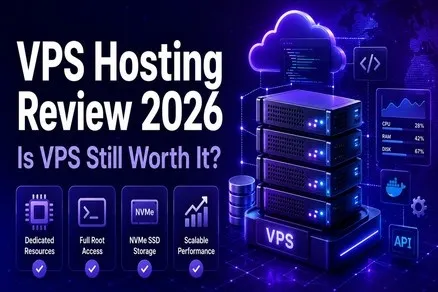
When evaluating VPS hosting in 2026, most users are not just looking at entry pricing—they are trying to understand long-term cost, scalability, and whether the server environment actually fits their workload.
VPS hosting today is not just about low pricing anymore “cheap plans.” It is about predictable performance, NVMe infrastructure, and whether you can scale without rebuilding your entire setup.
This review breaks down everything you need to know about VPS pricing, renewal structure, technical capabilities, and how it compares to other hosting models like cloud hosting.
VPS Pricing Explained: 2026 Plans & Real Renewal Costs
VPS hosting today is built around scalable NVMe-based infrastructure. Instead of shared resources, you get dedicated allocations of CPU, RAM, and storage that can be upgraded on demand.
VPS Plan Structure
Most VPS providers, including Hostinger, structure their plans and pricing into four main tiers:
- NVMe 2 (entry-level environments)
- NVMe 4 (growth stage applications)
- NVMe 8 (high traffic workloads)
- NVMe 16 (enterprise-level performance)
Real Pricing Breakdown
What matters most here is not the entry price, but the renewal structure. In most VPS environments, pricing increases after the promotional term ends. However, unlike misleading “shock pricing” claims seen in some comparisons, these increases are predefined and transparent per plan.
VPS vs Cloud Hosting: Which Do You Actually Need?
This is where most users get stuck because SMB owners are choosing between VPS and cloud hosting. Both give you server power, but the way you manage them is completely different.
VPS hosting is built for users who want full control over their environment. You get root access, install your own software stack, and manage performance manually. It is designed for developers, agencies, and technical users who need flexibility and deeper configuration.
Cloud hosting, on the other hand, reduces technical workload. Instead of managing everything manually, the infrastructure handles scaling and resource allocation automatically. This is why many SMB owners prefer for SMB owners who prefer simplicity.
Quick Comparison
Here’s the practical difference:
- VPS = More control + more customization + predictable structure
- Cloud hosting = Easier management + automatic scaling + less responsibility, which pairs perfectly with an intuitive website builder.
VPS vs DigitalOcean: The Developer Decision
For developers and freelancers, the choice often comes down to traditional VPS providers like Hostinger versus cloud platforms such as DigitalOcean—or even comparing Hostinger vs GoDaddy vs Bluehost to see which ecosystem fits best.
Bluehost VPS follows a fixed monthly pricing model, which makes budgeting simple and predictable. You always know your baseline cost, even when upgrading resources or running multiple client projects.
DigitalOcean works differently. It uses hourly billing droplets, which provides more granular scaling but can lead to fluctuating monthly costs depending on usage.
Side-by-Side Comparison
The main takeaway here is
- Bluehost VPS = stable pricing + easier budgeting + predictable workload
- DigitalOcean = flexible scaling + advanced control + usage-based cost
In real-world agency and freelance scenarios, predictable monthly costs often win because client projects depend on stable infrastructure expenses rather than fluctuating bills.
Technical Specs: OS, Control Panels, and Advanced Deployments
Modern VPS environments are built on high-performance infrastructure including AMD EPYC processors, DDR5 memory, and NVMe PCIe storage.
These systems handle well:
- Low-latency database workloads
- Containerized applications
- API-driven systems
- High traffic websites
Operating System Support
VPS environments primarily support Linux distributions such as Ubuntu, Debian, and AlmaLinux. Full root access allows complete control over configuration and optimization.
Windows VPS support is limited and typically requires manual configuration depending on server availability.
cPanel on VPS
Control panels like cPanel are not pre-installed by default. However, they can be installed manually on VPS environments to simplify:
- Website management
- Email hosting
- File system control
- Database administration
This makes VPS flexible for users who want shared-hosting-like usability on top of a dedicated environment, although those running purely WordPress sites might be better off exploring an optimized WordPress hosting plan.
Running Automation Tools like n8n
One of the most common modern VPS use cases is automation workflows.
A mid-tier VPS (such as NVMe 2 class environments) is sufficient to run tools like:
- n8n automation workflows
- Docker containers
- Lightweight AI agents, such as those developed using the Hostinger Horizons AI app builder.
- Background task systems
This makes VPS hosting especially attractive for freelancers building automation-based services.
Is VPS Hosting Worth It in 2026?
VPS hosting continues to be one of the strongest infrastructure choices for users who need performance and control without the cost of dedicated servers.
Advantages
- NVMe SSD performance
- Dedicated IP included
- Scalable infrastructure
- Strong uptime reliability
- Full root access
Limitations
- Requires technical knowledge
- No fully managed environment by default
- Server maintenance responsibility on user
VPS hosting works best for developers, agencies, and technical SMB owners who value control over convenience.
Exclusive VPS Discount
To reduce initial setup cost, a promo code can be applied during checkout.
By utilizing active Hostinger coupons like the code LUV, you can get an extra 10% off your first VPS month.
The code is entered at checkout before payment confirmation, and applies only to the initial billing cycle.
Before choosing a VPS plan, it’s important to understand how it performs in real-world use cases and whether it actually matches your technical and business needs. From pricing and scalability to infrastructure and workload support, VPS hosting has a wide range of strengths — but also a few limitations that are worth considering before making a final decision.
To help you make a clearer choice, here are the most common questions users ask before getting started with VPS hosting.
Frequently Asked Questions About VPS Hosting (2026)
1. Do VPS prices increase after the first term?
Yes. VPS hosting plans usually renew at higher standard rates after the introductory period. However, the pricing structure is transparent and based on the selected plan, so users can easily estimate long-term costs.
2. What is included in VPS hosting plans?
VPS plans typically include dedicated CPU, RAM, NVMe storage, unmetered bandwidth, full root access, and a dedicated IP address for better performance and isolation.
3. Is there a money-back guarantee on VPS hosting?
Yes. Most VPS hosting providers offer a 30-day money-back guarantee, acting much like a free trial by allowing users to test performance risk-free before committing long term.
4. Does VPS hosting include a dedicated IP address?
Yes. Every VPS plan includes at least one dedicated IPv4 and IPv6 address at no additional cost, which improves security, SEO reliability, and server control.
5. Can I upgrade my VPS plan later?
Yes. VPS plans are fully scalable. You can upgrade CPU, RAM, and storage directly from your dashboard with minimal or no downtime.
6. Is VPS hosting managed or unmanaged?
Most VPS hosting environments are self-managed, meaning you are responsible for updates, configuration, and security. Some providers offer optional managed support for an additional cost.
7. Why are VPS prices different between plans?
Pricing differences are based on allocated hardware resources such as CPU cores, RAM size, NVMe storage capacity, and overall infrastructure performance.
8. What is the difference between VPS and cloud hosting?
VPS gives you dedicated resources and full control over your server, while cloud hosting focuses on automation, easier scaling, and reduced technical management.
9. Can I run applications like n8n on a VPS?
Yes. VPS hosting is ideal for automation tools like n8n, Docker containers, APIs, and lightweight AI applications, especially on mid-tier NVMe plans.
10. Is VPS hosting worth it in 2026?
Yes, VPS hosting is still one of the best options for developers, agencies, and SMBs who need performance, control, and predictable long-term costs without paying for dedicated servers.
Why VPS Hosting Is Still a Top Choice in 2026
VPS hosting in 2026 is no longer about “cheap servers.” It is about infrastructure efficiency, predictable scaling, and control over your environment.
For developers and agencies, VPS remains one of the most cost-effective and flexible hosting models available. For beginners or non-technical users, cloud hosting may still be the easier entry point.
If your priority is performance, flexibility, and long-term cost control, VPS remains a strong choice.
Don't forget to checkout the Black Friday deals, Cyber Monday sales, as well as the New Year deals for better and competitive prices.

.webp)












%20(1).webp)




.webp)


.webp)







.webp)






.webp)


.webp)
.webp)






.webp)
.webp)












%20128%20GB.webp)




















.webp)